Before you even think about website design or product photos, you need a solid game plan. Building a successful ecommerce business in Dubai isn’t just about having a great product; it’s about laying a strategic foundation that’s built specifically for the unique UAE market. This blueprint means digging deep into market research, getting your business set up legally, and truly understanding what makes local shoppers tick.
Your Foundation for a Dubai Ecommerce Business

Long before a single line of code gets written, the real work begins. An online store in Dubai is far more than a digital catalogue; it’s a legitimate business that has to play by local rules and connect with a very diverse, tech-savvy audience. Getting these first steps right can be the difference between a thriving venture and an expensive mistake.
The UAE’s online shopping market is on a rocket ship, projected to hit $17 billion by 2025. That kind of growth is fuelled by sky-high internet penetration and a customer base that demands fast, easy, and secure online experiences. While this presents a massive opportunity, it also means the competition is fierce. Your initial planning is where you carve out your space to win.
Nailing Your Niche and Unique Selling Proposition
Success starts with knowing exactly who you’re selling to and giving them a compelling reason to choose you. Dubai is a melting pot of Emiratis, expats from over 200 countries, and tourists, all with different shopping habits. A one-size-fits-all approach just won’t cut it here.
Good market research means going deeper than “fashion” or “electronics.” You need to find a specific niche. For instance, instead of just selling skincare, you could focus on organic, vegan-friendly products for sensitive skin—a segment that really speaks to the health-conscious crowd in the region.
Once your niche is clear, you need a powerful Unique Selling Proposition (USP). This is your core promise, the one thing that makes you stand out. Your USP could be:
- Product Exclusivity: Offering brands or items that people can’t find anywhere else in the UAE.
- Superior Service: Dazzling customers with perks like 2-hour delivery in Dubai or a personal shopper service on WhatsApp.
- Cultural Alignment: Creating collections for Ramadan, Eid, or Diwali that genuinely connect with local traditions.
A strong USP isn’t just a marketing slogan. It’s the North Star for your entire business, influencing everything from the products you source to the way you handle customer service. It answers the most important question: “Why should I buy from you?”
Demystifying the Legal Requirements
This part is non-negotiable. You can’t just launch a website and start selling in Dubai. You absolutely need a valid trade licence, and there are two main ways to get one.
1. Mainland (DED) Licence
Issued by the Department of Economic Development (DED), this licence lets you sell directly to any customer across the UAE with no strings attached. It usually requires a physical office and is the go-to choice for businesses planning a significant local presence.
2. Free Zone Licence
Places like Dubai CommerCity or DMCC offer specialised ecommerce licences. These come with attractive perks, including 100% foreign ownership and tax breaks. The catch? You might need a third-party distributor to sell to customers on the mainland. It’s a great option for businesses targeting international customers or running a leaner operation.
Choosing the right licence will shape your costs, operational freedom, and how you can scale down the road, so weigh your options carefully. On top of that, you must follow UAE consumer protection laws covering returns, warranties, and data privacy. Your website needs a crystal-clear terms of service and a privacy policy that’s fully compliant.
This whole setup is part of a much bigger picture, which you can read about in this guide to website development services. By getting this legal and strategic groundwork sorted first, you build a resilient framework for a profitable ecommerce business in Dubai.
Choosing the Right Ecommerce Platform for Dubai
The technology you choose is the engine of your online store. Get this right, and you’re set for growth; get it wrong, and you’re looking at painful, expensive migrations down the line. It dictates everything from your day-to-day operations to the entire experience your customers have on your ecommerce website in Dubai.
Think of your platform as more than just a digital storefront. It’s the central nervous system for your sales, marketing, and fulfilment. For anyone serious about selling online in Dubai, three names always come up: Shopify, Magento (now Adobe Commerce), and WooCommerce.
Understanding the Top Contenders
Each of these platforms is built for a different kind of business. What’s perfect for a startup selling handmade abayas will absolutely not work for a massive electronics retailer with thousands of SKUs and complex inventory needs.
Shopify is the go-to for a reason: it’s incredibly user-friendly. As a hosted solution, they handle all the technical headaches like security, servers, and updates. This lets you focus on what you do best—selling your products. It’s ideal for small to medium-sized businesses that want to get online quickly and efficiently.
Its app store is a massive plus, giving you plug-and-play access to everything from loyalty programs to advanced analytics. You can add powerful features with just a few clicks.
Magento (Adobe Commerce) is the other side of the coin. It’s an open-source beast designed for total control and customisation. This is the platform for large enterprises that need a truly bespoke setup, like complex integrations with their ERP systems or a product catalogue numbering in the tens of thousands.
That power comes with a price tag, though. You’ll need a skilled development team and a serious budget for the initial build and ongoing maintenance.
WooCommerce strikes a nice balance. It’s a free plugin that turns any WordPress site into a powerful online shop. If you’re already using WordPress for your blog and content marketing, this is a fantastic way to blend content and commerce seamlessly. It’s flexible, but you’re responsible for your own hosting and security.
The chart below gives you a quick snapshot of how these platforms compare on cost and their readiness for the UAE market.
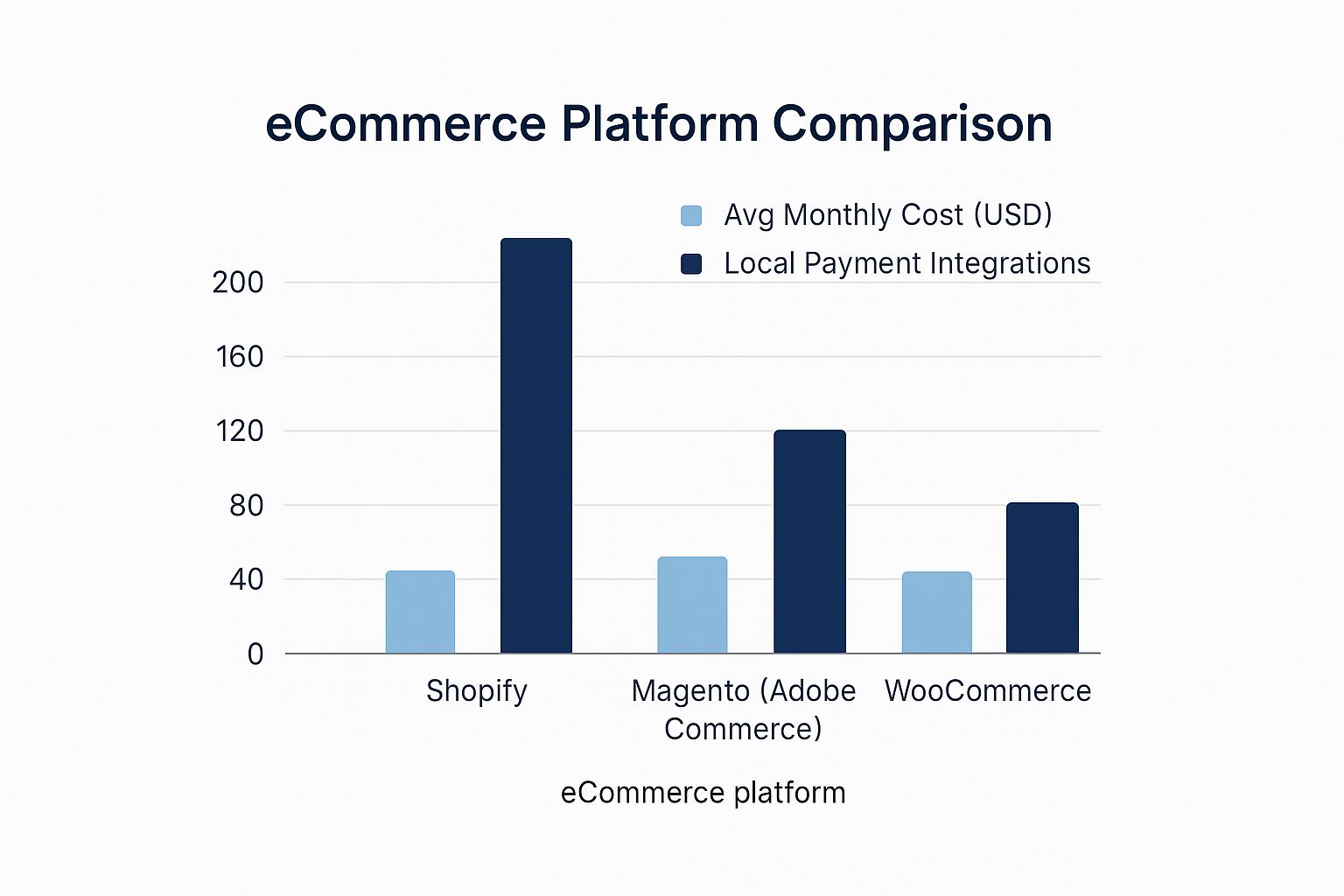
As you can see, Magento boasts the most local payment options but comes with a hefty price. Shopify and WooCommerce offer much more accessible starting points for most businesses.
Critical Features for the Dubai Market
When you’re building an ecommerce website in Dubai, generic features just won’t cut it. You need to think local from day one.
Here are the absolute must-haves:
- Arabic Language Support: This is non-negotiable. Your platform has to properly handle right-to-left (RTL) text across every single page, from the homepage to the final checkout confirmation.
- Multi-Currency Functionality: The UAE is a global hub. While the AED is your primary currency, showing prices in USD, SAR, or EUR builds immediate trust with the large expat and international customer base.
- Local Payment Gateway Integration: You must connect with the payment methods people here actually use. That means seamless integration with Telr, PayTabs, and Stripe, plus the increasingly popular Buy Now, Pay Later services like Tabby and Tamara.
- Shipping and Logistics APIs: Your store needs to talk directly to regional couriers like Aramex and Fetchr. This automates order fulfilment, gives customers accurate shipping costs, and provides the real-time tracking they expect.
Choosing a platform is like choosing a physical retail location. You need one that not only looks good but is also in the right neighbourhood, has the right infrastructure, and can grow with your business.
Comparing Top Ecommerce Platforms for Dubai
To make things clearer, I’ve put together a quick comparison table that breaks down how these three platforms stack up for a business operating in Dubai. It highlights the core differences in who they’re for and what they offer.
| Feature | Shopify | Magento (Adobe Commerce) | WooCommerce |
|---|---|---|---|
| Ideal For | Startups & SMEs | Large Enterprises | Content-heavy Businesses |
| Ease of Use | Very High | Low (Requires experts) | Medium |
| RTL Support | Good (Theme dependent) | Excellent (Built-in) | Good (Plugin dependent) |
| Cost | Low to Medium | Very High | Low (Variable) |
| Scalability | Good (Shopify Plus) | Excellent | Good (With right hosting) |
Ultimately, there’s no single “best” platform—only the one that’s right for your budget, your technical comfort level, and your ambitions.
If you’re looking for a powerful, user-friendly solution that gets the local details right without the overwhelming complexity of Magento, it’s worth exploring options around custom Shopify store design and development. This approach gives you a professional, market-ready store from day one.
Integrating Local Payments and Shipping

Alright, you’ve picked your ecommerce platform. Now comes the real test: connecting the dots between a customer hitting “buy” and the product arriving at their door. This is where your business makes or breaks its reputation in Dubai.
A clunky checkout or a vague delivery promise is the fastest way to lose a sale here. Your payment and shipping integrations aren’t just technical details; they are the heart of your customer experience and the engine of your cash flow. Get these right, and you’ll see fewer abandoned carts and a much happier customer base.
Selecting the Right Payment Gateways for Dubai
The golden rule for accepting payments in Dubai? Offer the methods people already use and trust. Just plugging in a generic international credit card processor won’t cut it. You need to work with local and regional players who get the nuances of the UAE market.
Here are the names you’ll see time and again for any serious ecommerce website in Dubai:
- Telr: A homegrown favourite. Telr is fantastic for its strong security and ability to handle multiple currencies—a huge plus in a city filled with expats and tourists.
- PayTabs: This is another regional powerhouse. It’s known for solid fraud protection and making it incredibly simple to accept payments from both local and international cards.
- Stripe: While a global name, Stripe has invested heavily in its UAE infrastructure. Developers love it for its clean APIs and how easily it slots into platforms like Shopify.
The magic that connects your store to these payment providers happens through API integration. To get a better grasp of how these systems talk to each other, you can explore our detailed guide that answers the question, “What is API Integration?.”
A quick word of advice: don’t choose a payment gateway based on transaction fees alone. Think about how easily it integrates with your platform, the quality of their support, and how quickly you get your money. A slightly higher fee is often a small price to pay for reliability.
The Rise of Buy Now, Pay Later Services
You can’t talk about ecommerce in the UAE without mentioning the explosion of Buy Now, Pay Later (BNPL). Services like Tabby and Tamara are everywhere, letting customers split their payments into interest-free instalments.
Trust me, adding a BNPL option can be a game-changer. It lowers the psychological barrier for buying more expensive items and has been shown to boost average order values by up to 40%. Customers get flexibility, and you get paid in full, right away, by the BNPL provider. It’s a win-win.
This is all part of a bigger picture. The UAE’s eCommerce market size hit about AED 32.3 billion and is expected to rocket to AED 50.6 billion by 2029. This growth is fuelled by a massive shift to cashless payments, with digital wallet use jumping from 41% to 53% recently.
Streamlining Your Dubai Shipping and Logistics
The moment a customer completes their purchase, the clock starts ticking. The delivery experience is a crucial part of your brand promise, and in a city that runs on speed, you need a logistics partner who can keep pace.
For local fulfilment, these are the top-tier providers to consider:
- Aramex: The undisputed leader in the Middle East, offering rock-solid domestic and international shipping.
- Fetchr: A tech-first courier that cleverly uses a customer’s phone location for delivery—perfect for those tricky addresses.
- DHL: A global giant with a powerful local operation, making them a great choice if you’re also shipping internationally.
Make sure you configure your shipping settings properly from day one. Set up different shipping zones for Dubai, Abu Dhabi, Sharjah, and the other Emirates, as the rates will differ. Use your platform’s built-in tools or a dedicated shipping app to calculate rates based on order weight or value.
Finally, and this is non-negotiable, offer real-time order tracking. It gives customers peace of mind and will save your team countless hours answering “Where is my order?” emails.
Designing for Dubai’s Diverse Audience
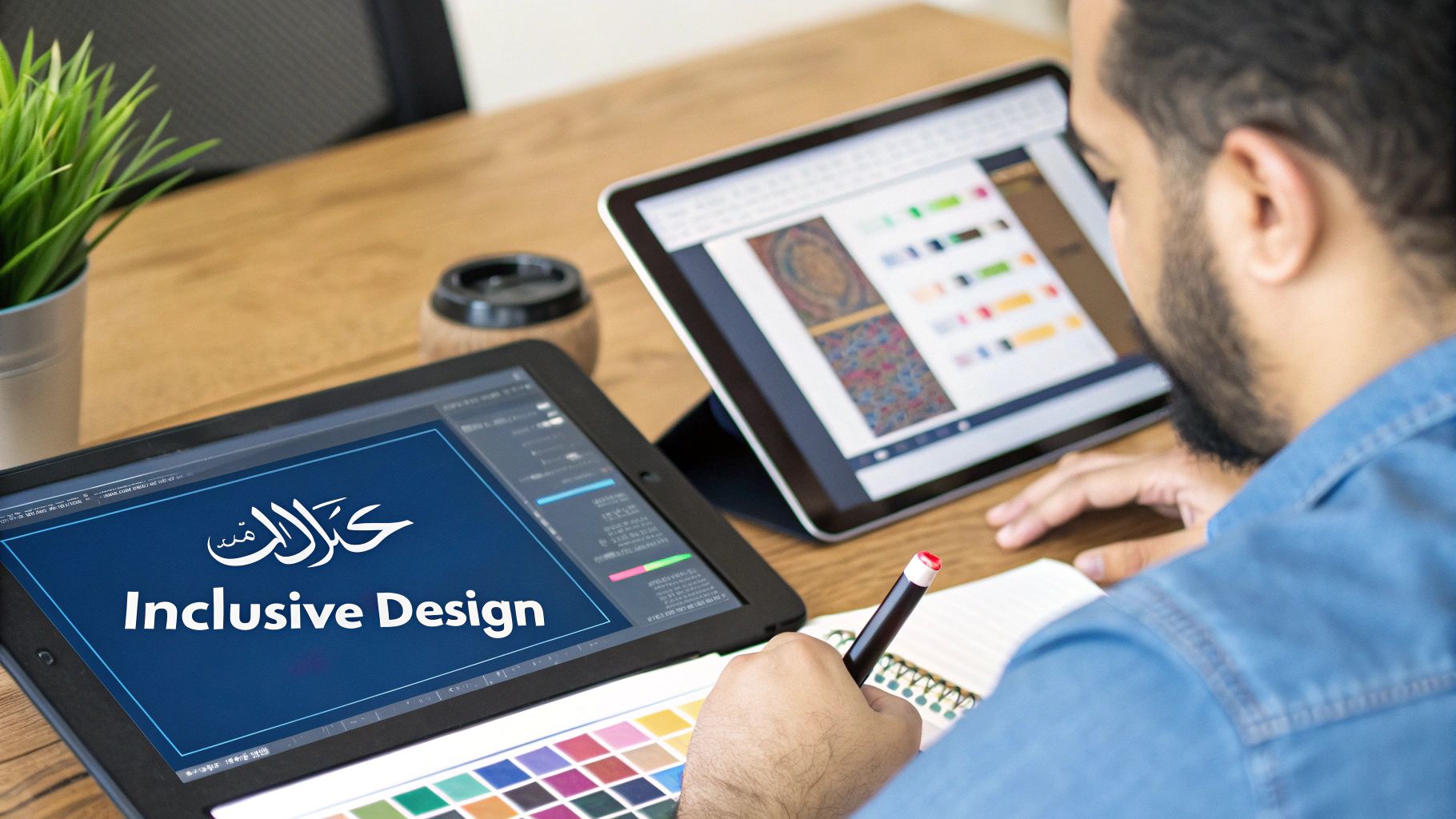
Think of your website’s design as its first handshake. In a market as sophisticated and multicultural as Dubai, that handshake needs to be firm, confident, and culturally fluent. A beautiful website is a good start, but real success hinges on a user experience (UX) that feels completely natural to both Emiratis and the city’s large expatriate community.
This is about more than just picking trendy colours. It’s about designing a smooth, intuitive journey from the very first click to the final “thank you for your order” page. With nearly everyone in the UAE online, you’re dealing with an audience that has incredibly high standards. Shoppers here expect flawless interfaces and great service, making a well-thought-out design a non-negotiable cornerstone of your business.
Embracing a Mobile-First Philosophy
Here’s a simple truth about the Dubai market: your customer’s first—and often only—interaction with your brand will happen on their phone. The old way of designing for a desktop and then trying to shrink it down for mobile just doesn’t cut it anymore. You have to build with a mobile-first design philosophy from day one.
This means every single element, from your navigation menus and product images to your checkout forms, must be designed for the thumb. Buttons need to be easy to tap, text has to be legible without zooming, and the entire layout must feel clean and uncluttered on a smaller screen.
Putting mobile first guarantees your site is fast, accessible, and a breeze to use for the vast majority of your audience. This has a direct, positive impact on everything from your conversion rates to your Google rankings.
Implementing Flawless Bilingual Support
To truly connect with Dubai’s diverse population, you need to speak their language—literally. Offering your ecommerce website in Dubai in both English and Arabic is a must for building trust and reaching the widest possible audience. But this is far more complex than a simple translation. It requires a solid grasp of right-to-left (RTL) design.
When a user switches to Arabic, your entire site layout needs to intelligently flip. Here’s a quick look at what that means in practice:
- Text Alignment: All text, of course, must align to the right.
- Navigation and Menus: Your main menu, sidebars, and icons must shift to the opposite side of the screen.
- Imagery: Even images that imply direction (like a person looking to the left) might need to be mirrored to maintain the visual flow.
- Forms and Inputs: Form fields and their corresponding labels must also follow the RTL structure.
Getting RTL design right is a powerful signal to your Arabic-speaking customers. It shows a genuine commitment and respect that goes far beyond basic functionality, and it’s one of the fastest ways to build serious brand loyalty in the region.
Curating Visually Compelling Product Presentations
Dubai shoppers are aspirational. They aren’t just buying a product; they’re buying into a lifestyle. Your product photography and descriptions need to capture that feeling. Forget generic stock photos—they won’t resonate here. Instead, invest in high-quality, professional photography that places your products in a context your target customer can relate to.
For instance, if you sell luxury homeware, show it in a modern apartment overlooking the Dubai Marina, not a generic suburban setting. This simple shift helps customers visualise the product in their own lives, making the purchase feel more real and desirable.
Your product descriptions need to be just as compelling, in both English and Arabic. They should be persuasive and focus on the benefits, not just a dry list of features. Use bullet points to highlight key details, making the information easy to scan and digest.
Optimising the Path to Purchase
Every unnecessary click or confusing step in your checkout process is a potential lost sale. Cart abandonment is one of the biggest headaches for any online store, and a streamlined, frictionless checkout is your most powerful weapon against it.
Start by making your navigation crystal clear. Use logical categories and implement a robust search function with helpful filters. A customer should be able to find exactly what they’re looking for in three clicks or less.
When they get to the checkout, keep it as brief as humanly possible:
- Offer Guest Checkout: Forcing people to create an account is a notorious conversion killer. Let them buy quickly.
- Minimise Form Fields: Only ask for the information you absolutely need to process the order.
- Show Progress: Use a simple visual indicator (e.g., Shipping > Payment > Confirm) so customers always know where they stand.
The UAE has fully embraced online shopping, with consumer electronics, fashion, and beauty leading the charge. You can discover insights into UAE ecommerce on trade.gov to get a deeper feel for these trends. The businesses that truly succeed are the ones that master these user experience details. By focusing on a design that’s culturally sharp, mobile-native, and incredibly simple to use, you’re building a strong foundation for a thriving online business.
Getting Your Dubai Online Store Noticed
Look, building a beautiful website is a huge accomplishment, but it’s only the first step. If nobody can find it, all that effort is for nothing. To really make a splash in the Dubai market, you need a smart, multi-channel marketing plan that speaks directly to the local audience. This isn’t about just throwing money at ads; it’s about being strategically visible right where your potential customers are looking.
Your go-to-market plan for an ecommerce website in Dubai has to be as vibrant and diverse as the city itself. From organic Google searches to paid social media campaigns, every channel has a part to play in getting customers to your site, making a purchase, and coming back for more.
Win the Local SEO Game
Search Engine Optimisation (SEO) is your long-game. It’s how you attract a steady stream of free, high-intent traffic over time. Think about it: when someone in Dubai googles “buy organic skincare online,” you want your store to be one of the first things they see. That journey starts with smart, localised keyword research.
Forget generic terms. You need to get inside the head of a UAE shopper. What are they actually typing into their search bar? Tools like Ahrefs or SEMrush are brilliant for this, helping you uncover gems like:
- “next day delivery electronics Dubai”
- “luxury abaya online UAE”
- “Ramadan gifts for family”
Once you’ve got your list, weave these phrases naturally into your product descriptions, category pages, and any blog content you create. And please, don’t forget to set up a detailed Google Business Profile. It literally puts your business on the map, boosts your credibility, and helps you pop up in local searches for shoppers nearby.
Putting Your Money to Work with Paid Ads
While SEO is a slow burn, paid advertising gets you traffic right now. Here in the UAE, your customers live on social media, making it the perfect place to run highly targeted ad campaigns.
Instagram and TikTok are visual goldmines, especially for fashion, beauty, and lifestyle brands. Your goal is to stop people mid-scroll with eye-catching videos and stunning product photos. The targeting capabilities are incredible; you can zero in on specific demographics, interests, and even online behaviours right here in the Emirates.
At the same time, Google Ads is your direct line to customers with strong buying intent. When someone is actively searching for a product you sell, running a search campaign for your keywords puts your store front and centre at the exact moment they’re ready to pull out their wallet.
I see so many new businesses make the same mistake: they spread their ad budget too thin across too many platforms. My advice? Start with just one or two channels where you know your target audience hangs out. Get good at it, track your return on ad spend (ROAS) like a hawk, and only then start branching out.
The Power of Local Influencers
When it’s done right, influencer marketing in Dubai can be a game-changer. Partnering with local content creators gives your brand an instant shot of authenticity and introduces you to an audience that already trusts them. The trick is to find influencers whose followers are a genuine match for your ideal customer.
Don’t get dazzled by huge follower counts. An influencer with 10,000 super-engaged followers in your specific niche will nearly always bring you better results than one with 100,000 generic followers. Focus on building real relationships for longer-term campaigns, not just one-off posts.
Build Your Own Audience with Email & SMS
One of the most valuable things you can own is a direct line to your customers. Social media algorithms can change overnight, but your email and SMS lists belong to you. You need to start building these lists from the moment you launch—it’s absolutely essential for driving repeat business.
Give people a good reason to sign up. A simple 10% discount on their first order or early access to new collections works wonders. Once they’re in, you can build that relationship with automated campaigns like:
- A Welcome Series: Tell your brand story and make new subscribers feel special.
- Exclusive Offers: Reward your most loyal customers with deals no one else gets.
- Abandoned Cart Reminders: A gentle nudge is often all it takes to recover a lost sale.
The UAE is a buzzing, competitive market with over 36,000 online stores. Apparel leads the pack with around 6,520 stores (17.7%), with Home & Garden and Beauty & Fitness not far behind, showing just how much consumer demand there is. You can explore more statistics on the UAE’s eCommerce landscape to see where you fit in. By building that direct line of communication, you can cut through the noise and create true customer loyalty.
Common Questions About Ecommerce in Dubai
Getting started with ecommerce in Dubai brings up a lot of questions. Honestly, it’s a path filled with details that can trip up even seasoned entrepreneurs. Getting the right answers from the get-go can save you a world of headaches (and money), helping you avoid common mistakes and make smarter choices right from day one.
Let’s dive into the most frequent queries we hear from founders just like you.
What’s the Real Cost to Build an Ecommerce Website in Dubai?
This is the big one, and the honest-to-goodness answer is: it depends. A simple, clean Shopify store built from a template can get you started for around AED 10,000. But if you’re looking for a completely bespoke, enterprise-grade solution on a platform like Magento, you could easily be looking at a budget well over AED 100,000.
The critical thing to remember is that the initial build is just one piece of the puzzle. Your total budget needs to cover the ongoing costs that actually keep your business humming. Don’t forget to factor in:
- Annual Trade Licence Fees: A non-negotiable, recurring cost to operate legally.
- Marketing and Advertising: This is your fuel for growth—think SEO, social media ads, and influencer campaigns.
- Platform Subscriptions & App Fees: Monthly costs for your ecommerce platform and any essential third-party apps.
- Website Maintenance: For regular updates, security monitoring, and technical tweaks.
Do I Really Need a Licence to Sell Online in Dubai?
Yes, absolutely. This is not a grey area. Running an ecommerce business in the UAE without a valid trade licence is illegal, period. You generally have two main routes to get licensed.
The first is a mainland licence from the Dubai Department of Economic Development (DED). This gives you the freedom to sell directly to anyone, anywhere in the UAE. The second option is a free zone licence from an authority like Dubai CommerCity, which offers perks like 100% foreign ownership but might mean you need a local distributor to sell on the mainland. The right choice really hinges on your business model.
Choosing the right licence is more than a legal hoop to jump through—it’s a core strategic decision. It directly impacts your operational scope, tax liabilities, and future growth potential. Think carefully about where your customers are (local, international, or both) before you commit.
What Products Actually Sell Well Online in the UAE?
If we’re talking big picture, the usual suspects always top the charts: consumer electronics, fashion, beauty products, and home goods. But here’s the thing—real success isn’t found by chasing the broadest categories. It’s about carving out a specific, profitable niche.
For instance, instead of just “fashion,” what about sustainable, locally-designed modest wear? Instead of generic “beauty,” why not focus on organic skincare formulated specifically for humid climates? The magic happens when you do your homework, find an underserved customer need, and build your ecommerce website in Dubai to meet that specific demand. That’s how you stand out.
How Should I Handle Shipping and Returns?
In a market as demanding as Dubai, you can’t afford to get logistics wrong. Smooth, fast, and reliable delivery is the expectation. Partnering with a trusted local courier like Aramex, Fetchr, or DHL is pretty much standard practice. They can handle the entire fulfilment chain, from warehousing and packing to that crucial last-mile delivery.
On the legal side, you are required to have a clear and fair return policy prominently displayed on your site. But beyond legality, a hassle-free return process is one of the single most powerful ways to build customer trust and earn their repeat business.
At Invocom, we don’t just build websites—we architect complete digital ecosystems that power growth. Whether it’s designing a high-converting Shopify store or integrating complex CRM and ERP systems, our team provides the technical expertise and strategic guidance you need to win in Dubai’s competitive market. Ready to build an ecommerce business that’s set to scale? Get in touch with us at invocom.me.